
Ascending to power during the Renaissance, the Medici shaped the cultural landscape of Florence. They elevated the city into a hub of artistic, intellectual, and political brilliance through their unwavering support for the talents of visionaries.
Florence, as you may imagine, is exquisite. It’s like an extraordinary treasure trove in which every step is infused with art and history. The city is often labeled the cradle of the Italian Renaissance because many genius, such as Michelangelo, Botticelli, Brunelleschi, and Leonardo da Vinci, thrived here. Yet behind their achievements is the unparalleled patronage of a powerful dynasty that recognized the transformative power of culture: the Medici.
The Medici shaped the cityscape of Florence.
The rise of the Medici family began in the late 14th century when they derived from the textile trade and established themselves as bankers. Guided by shrewd business acumen, they accumulated tremendous wealth and became the largest and most reputable bank in Europe throughout the 15th century. This prosperity, in turn, facilitated political supremacy, making them de facto rulers of Florence and, later, the whole of Tuscany.
Under the Medici’s reign, Florence developed from a humble Roman settlement named Florentia into one of Italy’s most fascinating cities. They generously sponsored artists and spent a substantial fortune beautifying the city with stately palaces and gorgeous gardens. For instance, Palazzo Medici Riccardi, Palazzo Pitti, and the famous Uffizi Gallery, to name a few. Even the construction of Florence’s landmark and religious core – the Santa Maria del Fiore – was partly funded by the Medici.
1. Florence Cathedral
Taking over 130 years to complete, the Santa Maria del Fiore – also known as Florence Cathedral – is one of the largest and most marvelous worshipping places in Europe. It stands at the city’s heart as a symbol of Florence and the Renaissance culture. And no matter how often I see it, I am still enthralled by this delicate marvel.
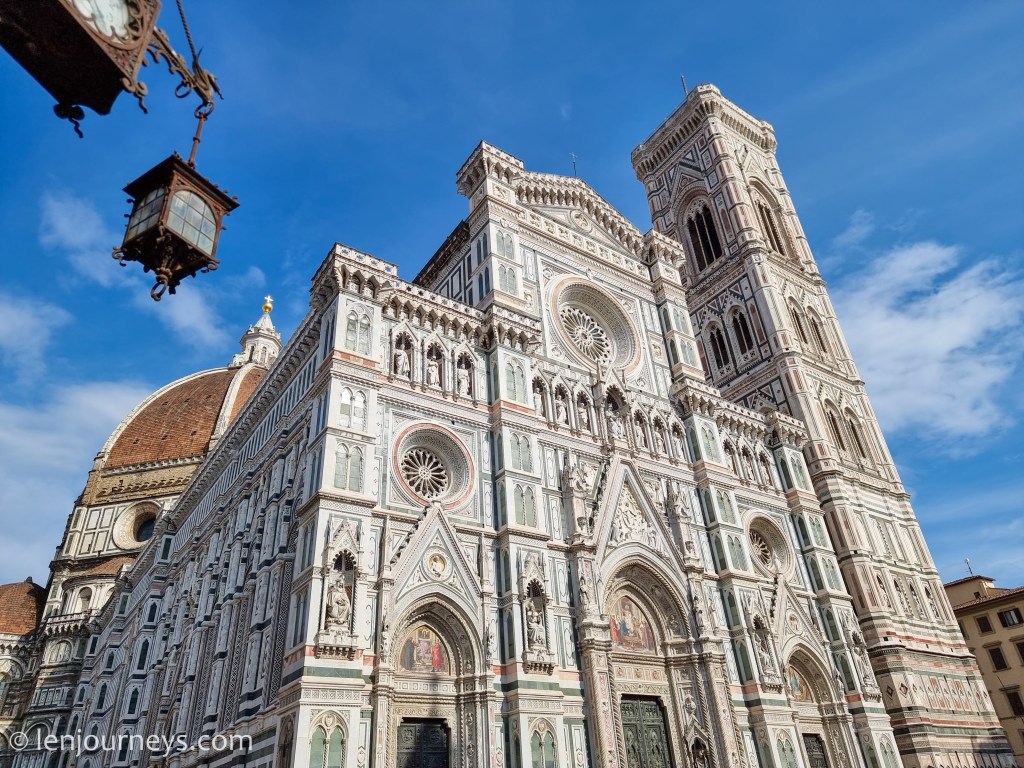
The first thing that captured my attention was the cathedral’s exterior – a magnificent display of stylized flowers and geometric patterns crafted of marble in various shades of green, pink, and white. Its beauty is accentuated by dozens of elaborate bas-reliefs and sculptures depicting apostles, prophets, and the Blessed Virgin Mary. Interestingly, the facade we see today is a 19th-century addition, replacing the original structure torn down by the Medici in the 16th century. Some parts are on display in the nearby museum.
An icon of the Italian Renaissance.
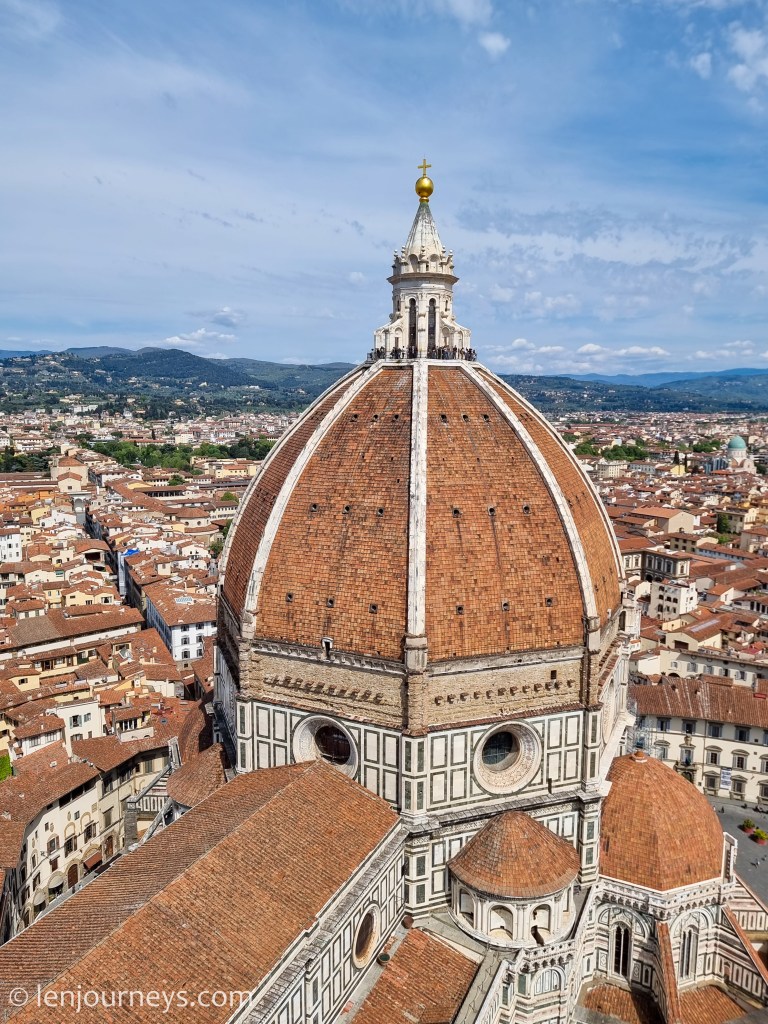
Yet the most striking feature of the cathedral is the red-tiled dome, which, along with the adjacent bell tower, has defined the Florentine skyline for centuries. Designed by Filippo Brunelleschi but engineered by his successors, this 91-meter-high structure remains the world’s largest masonry vault ever constructed, with over four million bricks used. Inspired by Rome’s Pantheon, it’s considered an architectural innovation, consisting of an internal and an external dome united by a ribbed framework.


1.1 The Interior
In contrast to the lavishly adorned facade, the vast interior of Florence Cathedral is decorated with only dozens of artworks. That includes a monumental sundial created by artists of the early Renaissance, a large mosaic lunette depicting the Coronation of Mary, several intricate statues, and 44 colorful stained glass windows.
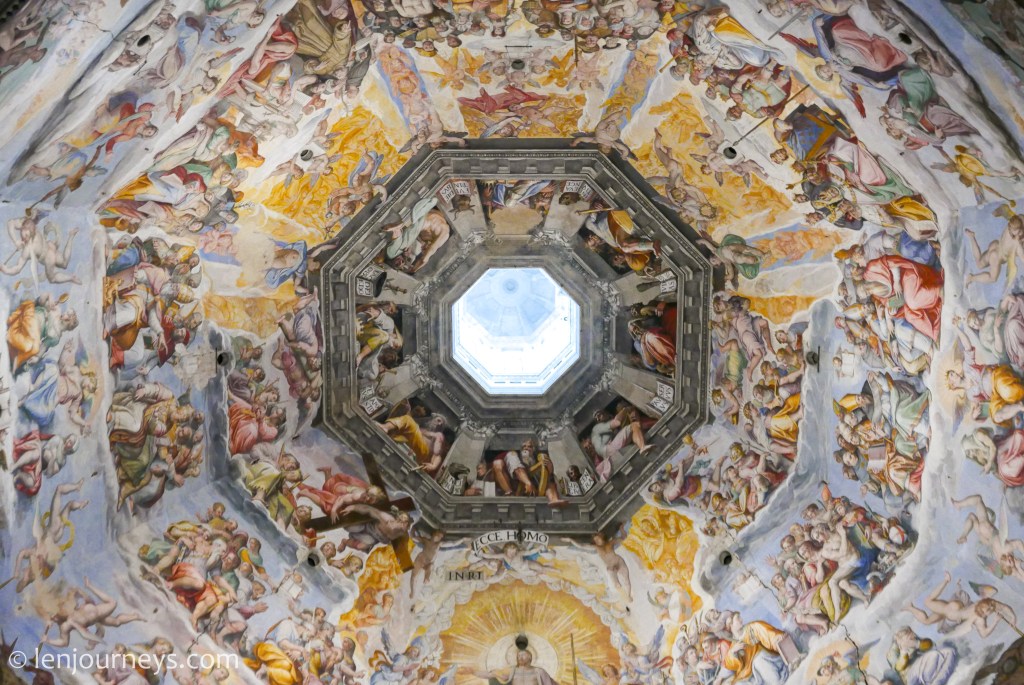
However, none could surpass the geometric marble floor, which formed an optical illusion of a giant abyss when viewed from above. It was a colossal task that took 160 years to complete, with each red, white, black, and green tile individually inlaid by the grand ducal workshops of Florence in the 16th and 17th centuries. Beneath the dome is another masterpiece by Giorgio Vasari and Federico Zuccari, the Last Judgement. This flamboyant fresco is one of the largest paintings in art history, covering 3,600 m2 and featuring 700 vivid figures.


Tips: You don’t need a ticket to enter the Cathedral, just need to line up. The earlier the better because the queue grows very long as the day progresses. Alternatively, you can join an official guided tour of Opera di Santa Maria del Fiore. Tickets, or rather Passes, are only necessary to visit other structures. Currently, three types of passes offer admission to three, four, or five attractions. It’s highly recommended, if not mandatory, to buy them online in advance. The tickets are time-slotted and valid for three calendar days.
1.2 The Baptistry
Standing in front of the cathedral is the baptistry – an octagonal architecture dating back to the 11th century. It’s believed to have been constructed on the site of an ancient pagan temple dedicated to Mars – the Roman God of War and later converted into a church. The Romanesque building is made entirely of white marble, accentuated with several stripes and geometric patterns of forest green. It features an eight-sided prismatic roof and three sets of gilded bronze doors, on which the stories of humanity and redemption are spectacularly illustrated.
Inside, there are splendid mosaic artworks covering the entire vault. Though they are currently under maintenance, I can imagine how spectacular it is when complete. Artists of the Byzantine school began working on these masterpieces in the 11th century. However, they were only completed by the 14th century under the hands of Tuscan artisans. The green, red and white marble floor from the early 1200s is equally impressive. It took inspiration from Persian carpets, featuring sophisticated geometric patterns and mythical creatures.


1.3 The Museum
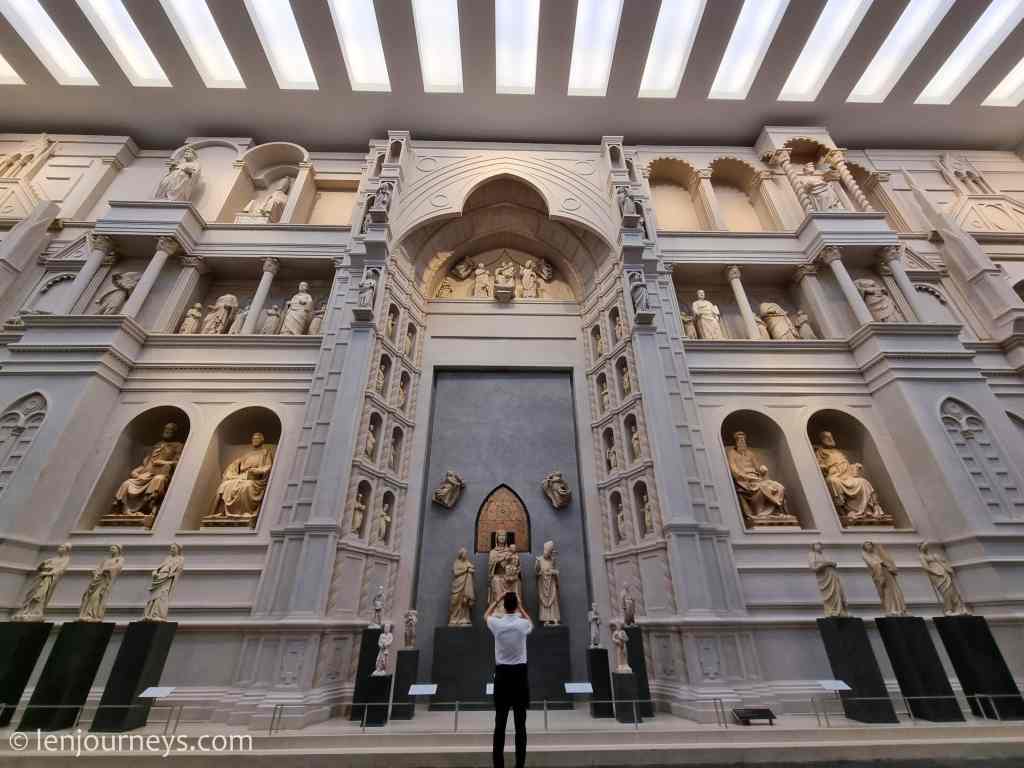
Though part of the monumental complex, the Opera del Duomo Museum behind the cathedral received a minuscule share of visitors. It’s such a shame because the museum preserves hundreds of artistic treasures that used to stand inside the cathedral, the baptistry, and the bell tower. They are now showcased on three sparkling floors, divided into 28 rooms.
Awe-inspiring highlights include original fragments and sculptures of the cathedral’s facade removed in the 16th century. Or the intricate Silver Altar that took over 100 years to create using more than 400 kg of silver. But most famous is perhaps the restored Gate of Paradise by Lorenzo Ghiberti, which originally adorned the eastern portal of the baptistry.


2. Uffizi Gallery
Home to 1500-odd masterpieces, the Uffizi Gallery is one, if not, Italy’s most prominent art gallery. It fully occupies a former administrative office constructed between 1560 and 1580 following the orders of Cosimo de’ Medici, the Duke of Florence. At first, only a tiny part of the building – the Tribune – was used to exhibit the most precious items from the ruling family collections. However, over time, more sections were recruited to showcase paintings and sculptures collected or commissioned by the dynastic members. By the late 18th century, the last heiress of the Medici bequeathed the collections to the Florentine government on the condition that they never leave the city. Since then, the Uffizi Gallery has opened to the public as a museum.
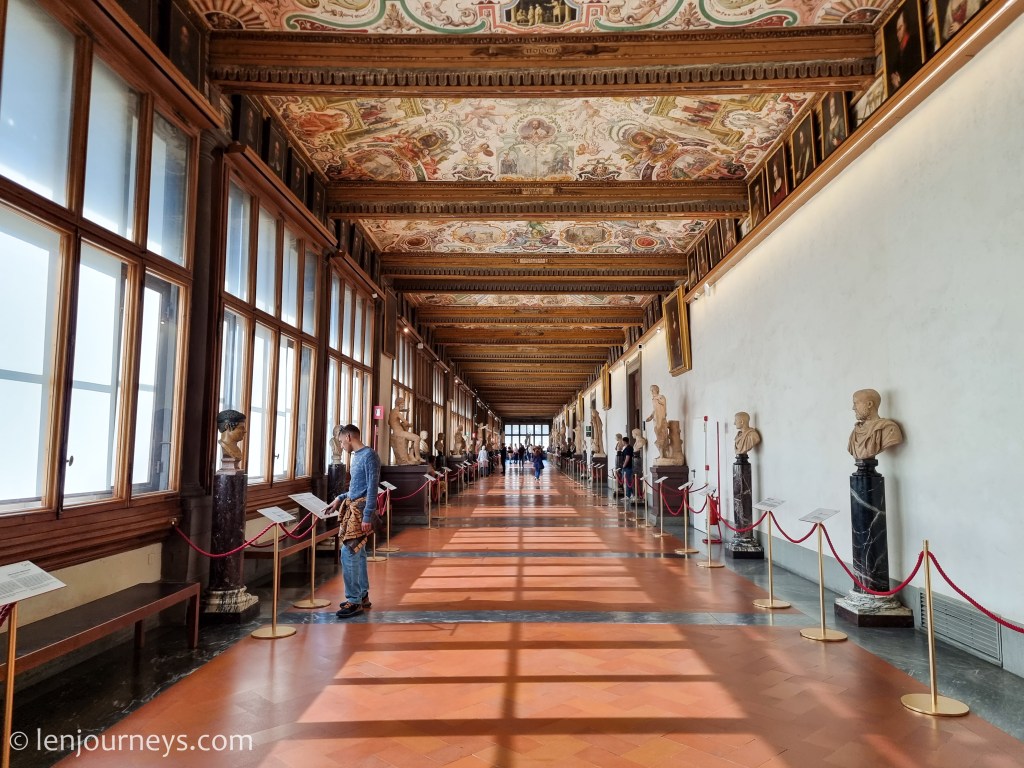
Centuries of art history are displayed within two floors of this vast U-shaped building, from ancient Roman copies of lost Greek sculptures to 18th-century Venetian paintings. Yet the Renaissance paintings from the 15th and 16th centuries form the core of this gallery. There are Madonna of the Goldfinch by Raffaello, the Ascension of Christ by Mantegna, the Head of Medusa by Caravaggio, and the widely popular Birth of Venus by Botticelli. Adding to that are some prime works by foreign artists, including Rembrandt, Rubens, and Van Dyck. Even the gallery itself is an artwork designed by Vasari, featuring light and airy corridors, a marvelous bust-lined staircase, and fabulous frescoed ceilings.



The Tribune
Of all the wondrous rooms of the Uffizi Gallery, none is so tiny yet spectacular as the Tribune. It’s designed to impress, featuring the finest furnishing money could buy. Top-notch materials from across the world are required to build this room, including polychrome marbles from Northern Africa, nearly 6,000 mother of pearls from the Indian Ocean, luxurious red velvets, and lots of gold.
Created between 1581 and 1583, the Tribune served as a treasure chest for Grand Duke Francesco de’ Medici. It has an octagonal layout, similar to the baptistry and the cathedral’s dome, which, according to Christian tradition, represents resurrection or eternal life. Here, the rulers of Florence stashed away their finest artworks, including the renowned Venus Medici, in addition to precious stones and extravagant jewels.

Tips: As a prime attraction in Florence, an E-ticket is a must to enter the Uffizi Gallery. Tickets are time-slotted. The earlier you visit, the less crowded the gallery is. The same website offers tickets for the Palazzo Pitti and Boboli Gardens.
3. Palazzo Pitti and Boboli Gardens
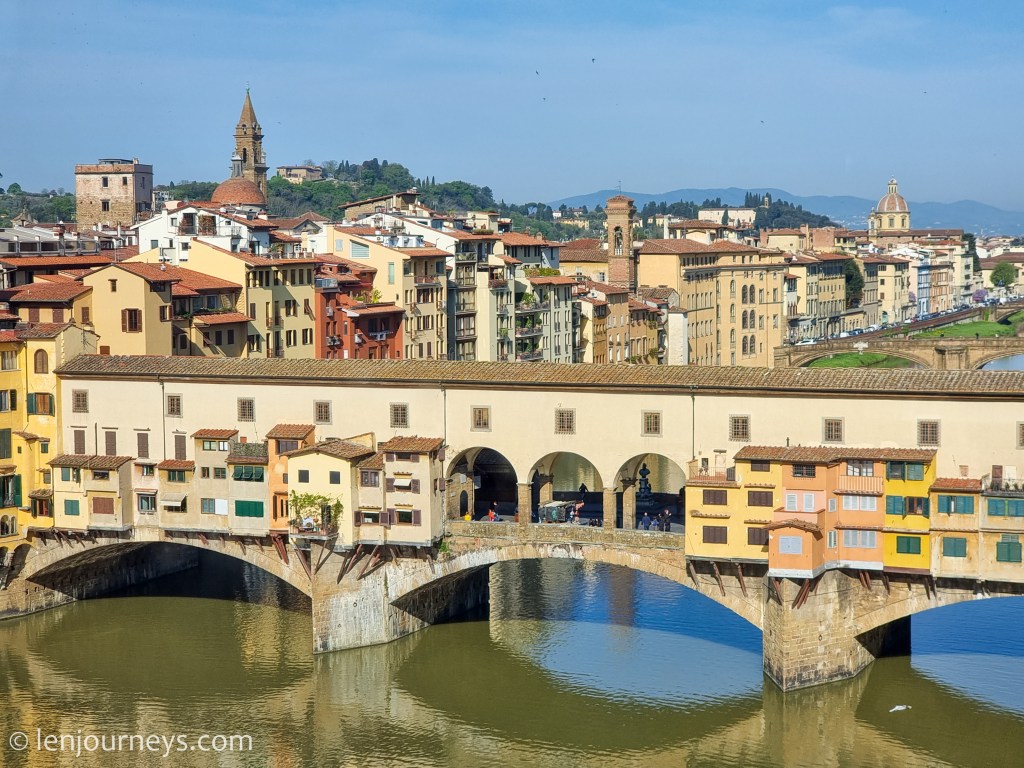
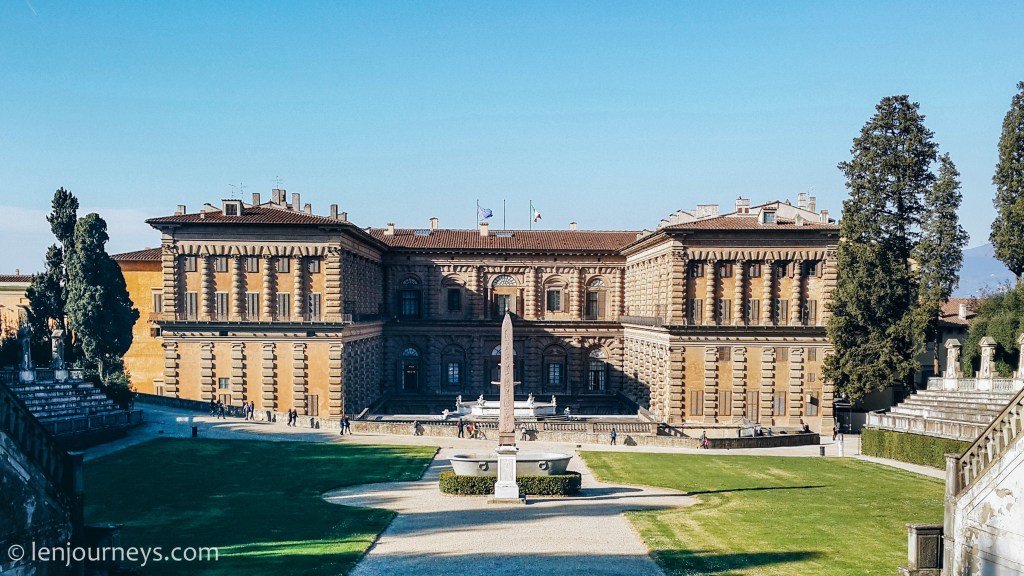
Connected to the Uffizi Gallery via a secret corridor above the Arno Bridge, the Palazzo Pitti is the chief residence of the Grand Duke of Tuscany. This vast Renaissance palace was constructed in the mid-15th century, initially as the townhouse for the Florentine banker Luca Pitti. However, he died before the project was even completed and the palace fell into disrepair until the Medici purchased it in 1550.
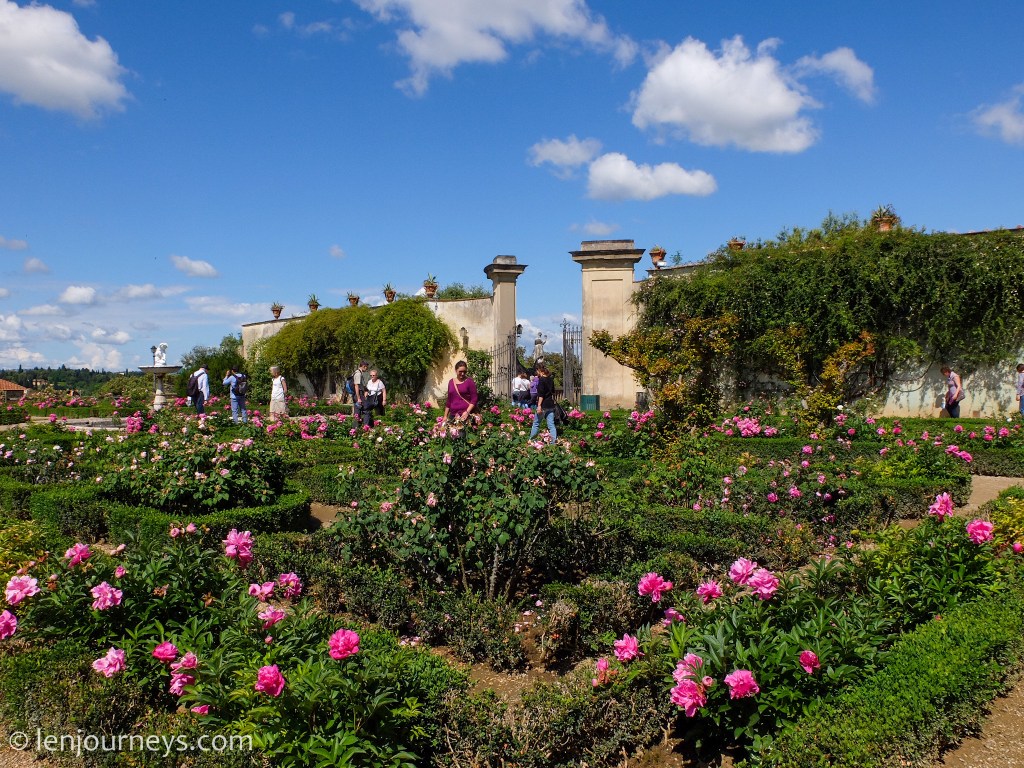
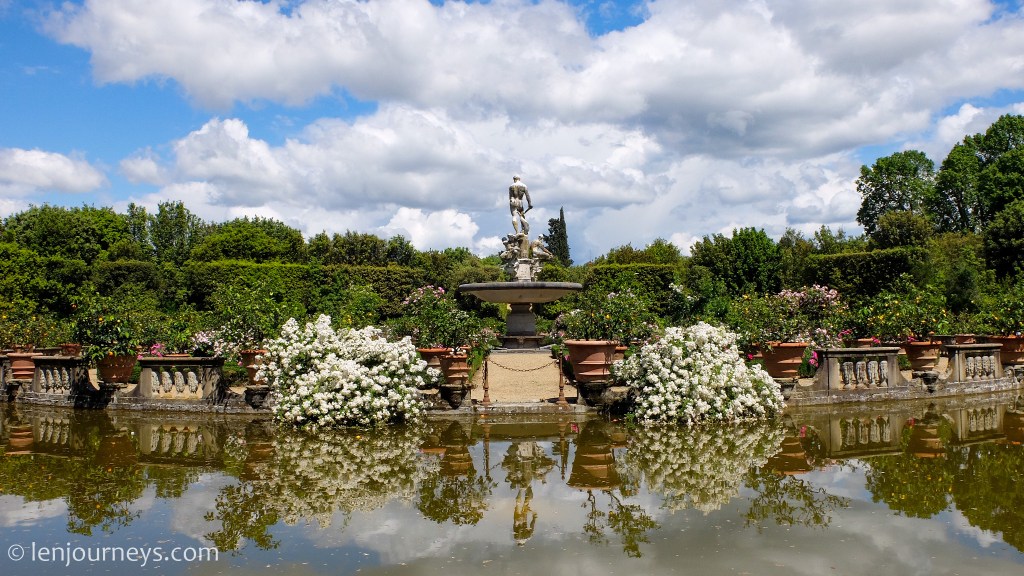
By the will of the Medici, Palazzo Pitti underwent an extensive renovation. Its main front and rear sections were enlarged, and a passage where they could cross the river without being seen was created. Behind the palace, the marvelous Boboli Gardens were also laid out. They are among the first examples of Italian gardens, in which buildings, and art objects such as statues, grottoes, and fountains blended perfectly into the greenery. The gardens showcase the Medici’s art de vivre – an artistic lifestyle that would later become a model for many European courts.
After the Medici died out, Palazzo Pitti continued to serve as the residence for the city’s ruling dynasties, including the Habsburg-Lorraine and the Savoy. They extended the gardens and added their touches, such as pavilions and a small glass house. In 1919, Victor Emmanuel III – king of a united Italy – donated the palace and gardens to the state, turning them into an expansive museum where people can appreciate art and nature.
Boboli Gardens showcase the Medici’s art de vivre.
4. Palazzo Riccardi Medici
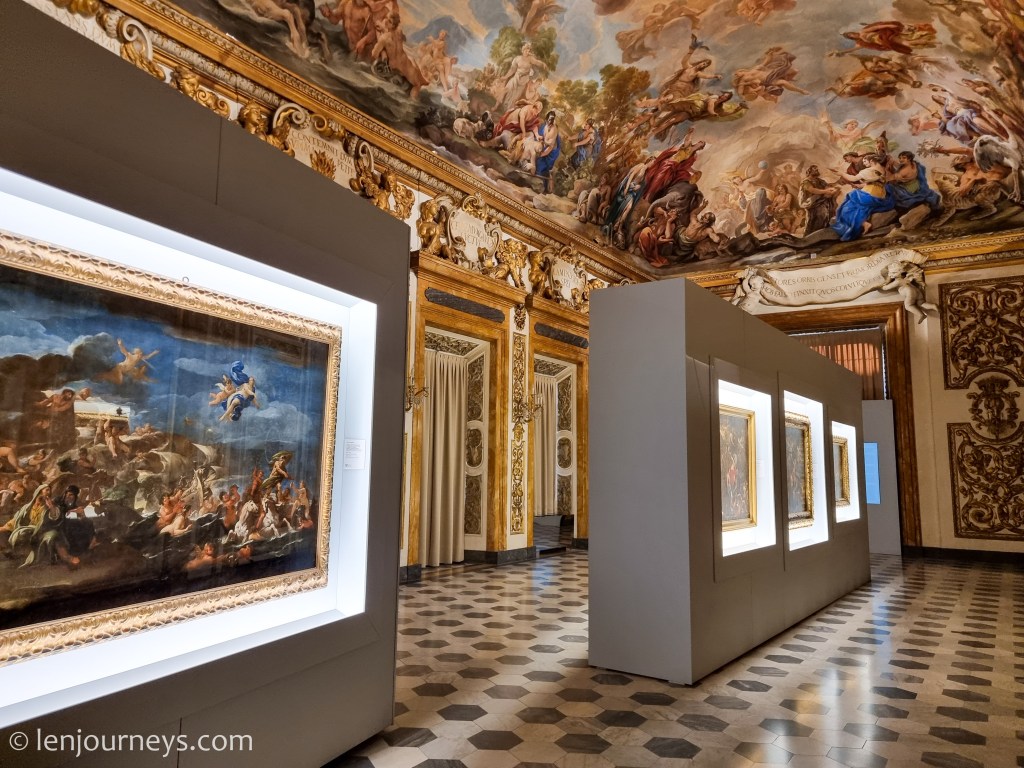
Back in town, the Palazzo Riccardi Medici is another hallmark of Florentine Renaissance architecture. Constructed in 1444 upon the commission of Cosimo de’ Medici, it was the first official residence for the House of Medici until the family went into exile in 1494. Afterwards, the palace changed hands many times, from the Republic of Florence to the Medici (1512) and the Riccardi (1659), before being sold back to the Tuscan state by the 19th century. Today, it serves as the seat of the Metropolitan City of Florence and a museum.
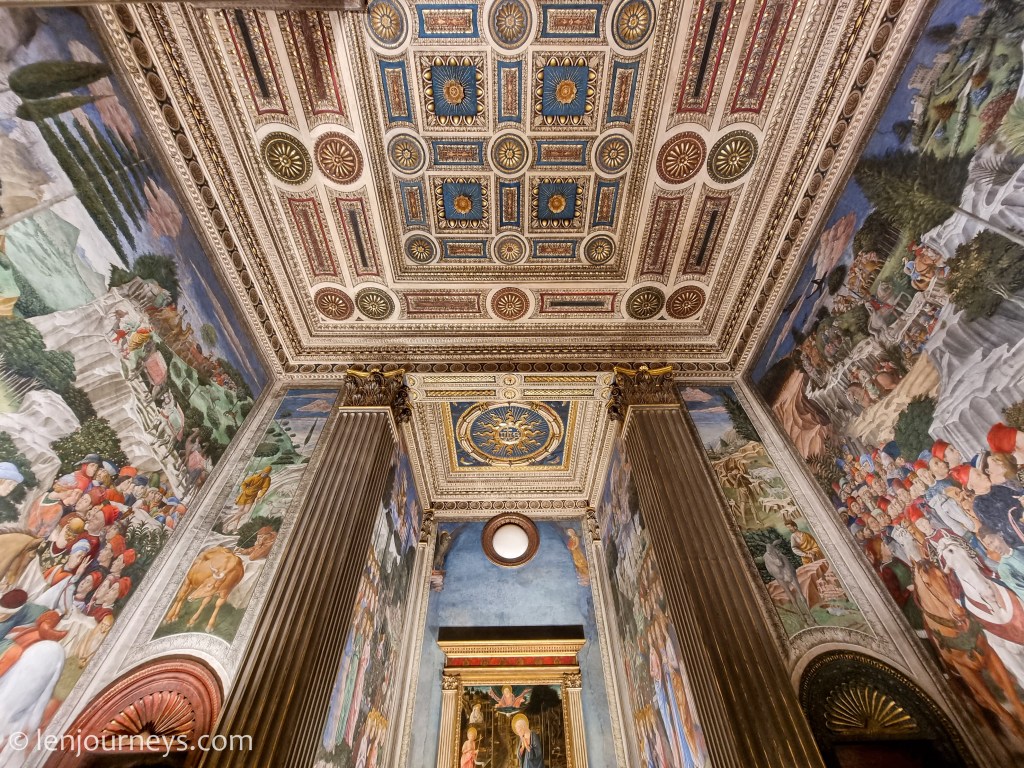
Designed by Michelozzo di Bartolomeo, Palazzo Riccardi Medici features two fabulously decorated floors surrounding an elegant column-lined courtyard that stands out for its harmony and pleasing balance. By the 18th century, the Riccardi further embellished the palace with gold ornaments and fine marble, busts, and sculptural reliefs, turning it into a sort of magnificent museum. Nevertheless, the pulsing heart of the palace is the Chapel of the Magi with walls covered by astonishing frescoes. They depict the holy parade of the Magi towards Christ Child, yet with a contemporary twist: the Medici family members also participate in this journey.



5. Medici Chapels
Even after death, the Medici’s appreciation for beauty lived on, and nowhere is it so explicit as the Medici Chapels. Seventy-eight years were the time to build this monumental mausoleum, adorned with granite, polychrome marble, and several haunting sculptures created by Michelangelo. It served as the final resting place for 49 members of the House of Medici, which spanned a few centuries.
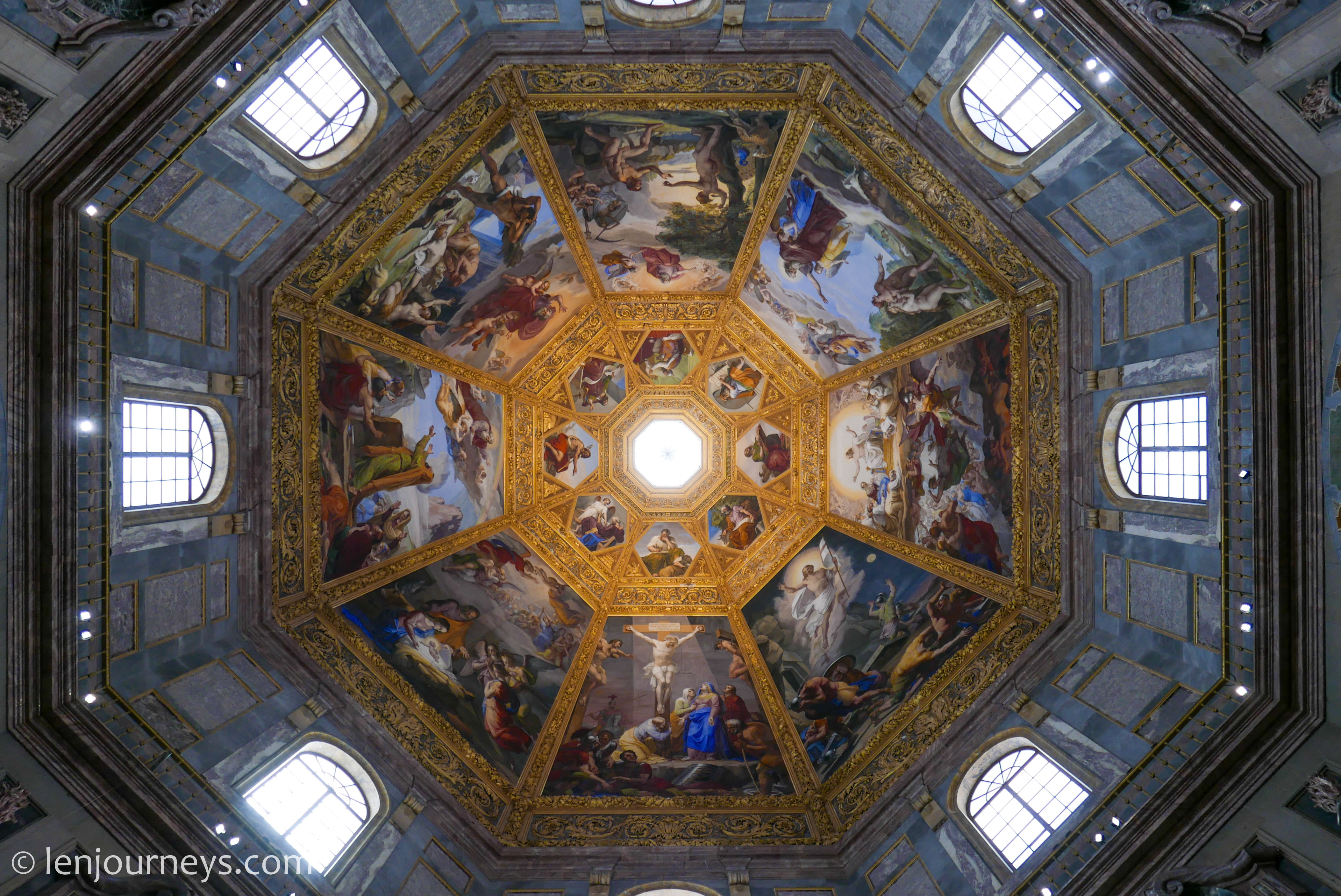
Though the chapels consist of three parts, the most beautiful is the octagonal burial chamber called the Chapel of Princes. It emulates the grandeur of the Florentine Baptistry, featuring a vividly painted dome, mosaic floors with elaborate geometric designs, and spectacular pietre dure – inlaid decortaions that piece together semi-precious stones. Coincidentally, the Taj Mahal, another famous mausoleum on the other side of the world, also applied this technique, albeit in a reinterpretation.
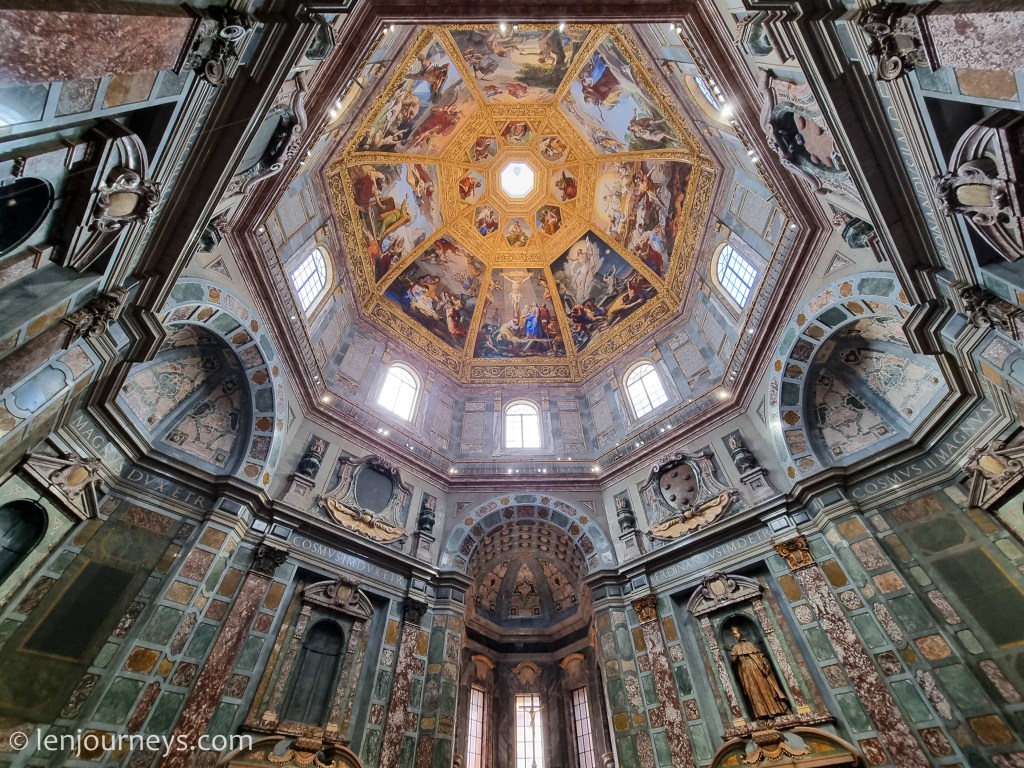
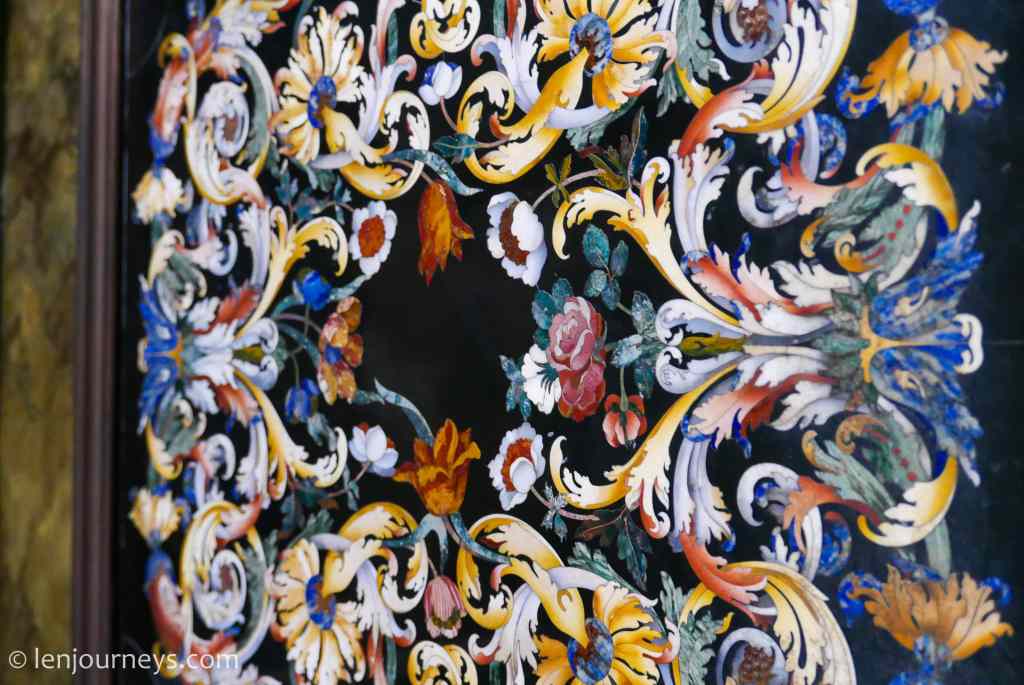


Tips: Though part of the Basilica of San Lorenzo, to enter the Medici Chapels, you have to find a separate entrance on the right side of the main church. You will first enter the crypts, followed by the Chapel of the Princes, and lastly, the New Sacristy designed and decorated by Michelangelo. Tickets are purchasable at the entrance.


Thank you Len for another insight on a beautiful city.
My pleasure! And thank you for your kind words 🙂
My pleasure too I thoroughly enjoyed it,
What a beautiful city! The first photo looks straight out of a painting. I didn’t know that Florence is also known for its soaps..
Neither did I, until I found the shop in Florence 🙂 Before that, I only knew about their famous rose water. Although the soap is really good, it is still somehow less popular than the French one.
I wish I would have known that before I went to Firenze, anyway thanks a lot!
My pleasure! 🙂
We only wish we had more time to explore Florence!
Same here. A few days was not enough for this city 🙁 I wish I could have more time to check the surrounding hills.
How long did you stay? We only had 2 days
They’re much recent inventions, but it’s also here where rose water and talcum powder were created!
I like their rose water. But I could not buy much because of the glass bottle. Too heavy 🙂
Such feminine looking soaps… Did you stock up on leather handbags to give to your girlfriend / wife / mum?? When I was there I saw bus loads of Chinese tourists just going straight to the main duty free shop… 😂
I think the tour guides / travel agencies intentionally lure them there because of the provision. But honestly, the stuff in duty free shop is available everywhere. Make no sense to me 🙂 I bought the lemon soap for my mom as a souvenir. A much lighter souvenir in comparison to Florence’s famous rose water 😉
I didn’t know that Florence is famous for its soap, rose water, and talcum powder as one of your readers pointed out. Did you notice their scent emanating through the city’s air? That would be very fascinating, walking around those impressive buildings with a hint of fruits or rose in the air!
Unfortunately, you can only smell it in the shops 🙁 Due to the heavy crowd on the street of Florence, you can only smell “human” most of the time, especially in summer. And the factories lie in the outskirt of the city. I would love to have a chance to visit them 🙂
How interesting, never knew about the soap industry – thank you for sharing.
Florence was on of my favourite cities in Italy, I’d love to go back and also explore more of the surroundings outside the city.
https://2weekendwanderers.com
Same here 🙂 I would love to see the Tuscany countryside, especially in summer.
This is very useful article with fantastic pictures, you have great blog, wish you all the best, thanks!!
Gosh, I feel like I’m getting Stendhal syndrom just from reading your post! So many incredible spots, full of history. I visited Florence a very long time before we started blogging, but going back would be a dream. I especially remember being stunned by the beauty and atmosphere in the Boboli gardens, walking through the arbors to get some shade.
Definitely saving this!
All the best
Stephanie and Jerome, Strafari
Many thanks for the kind words, you two 🙂 The Boboli gardens were a surprise for me. Much larger than I expected. I planned one hour but eventually spent nearly half a day there. The nearby Barnini garden is also beautiful, with nice views over the Cathedral.
Your Florence post has bought back so many memories, and a reminder that I need to get back and visit it again!
It’s definitely worth a re-visit, Anna 🙂 There are still places that are interesting and not crowded at all. Thanks for visiting!
This brought back some wonderful memories of my own visit to Florence. I didn’t see all you’ve shared, but most of it. What a golden time that was for Florence. Your photos are magnificent, really bringing it to life.
Alison
Thank you, I really appreciate it 🙂